Summit at 6,088m: Climb Huayna Potosí
Daily departures
- Duration
- 3 days
- Starting point
- La Paz
- Summit
- 6,088 m
- Highest night
- ~5,200 m, in a refuge
- Summit day
- ~900 m of climbing, at night
- Technical level
- No experience needed, ice school included
- Guiding
- 1 guide for 2 climbers
- Best season
- May to September
Three days to learn to walk on ice, sleep at 5,200m, and haul yourself to the summit of a 6,000er before dawn.
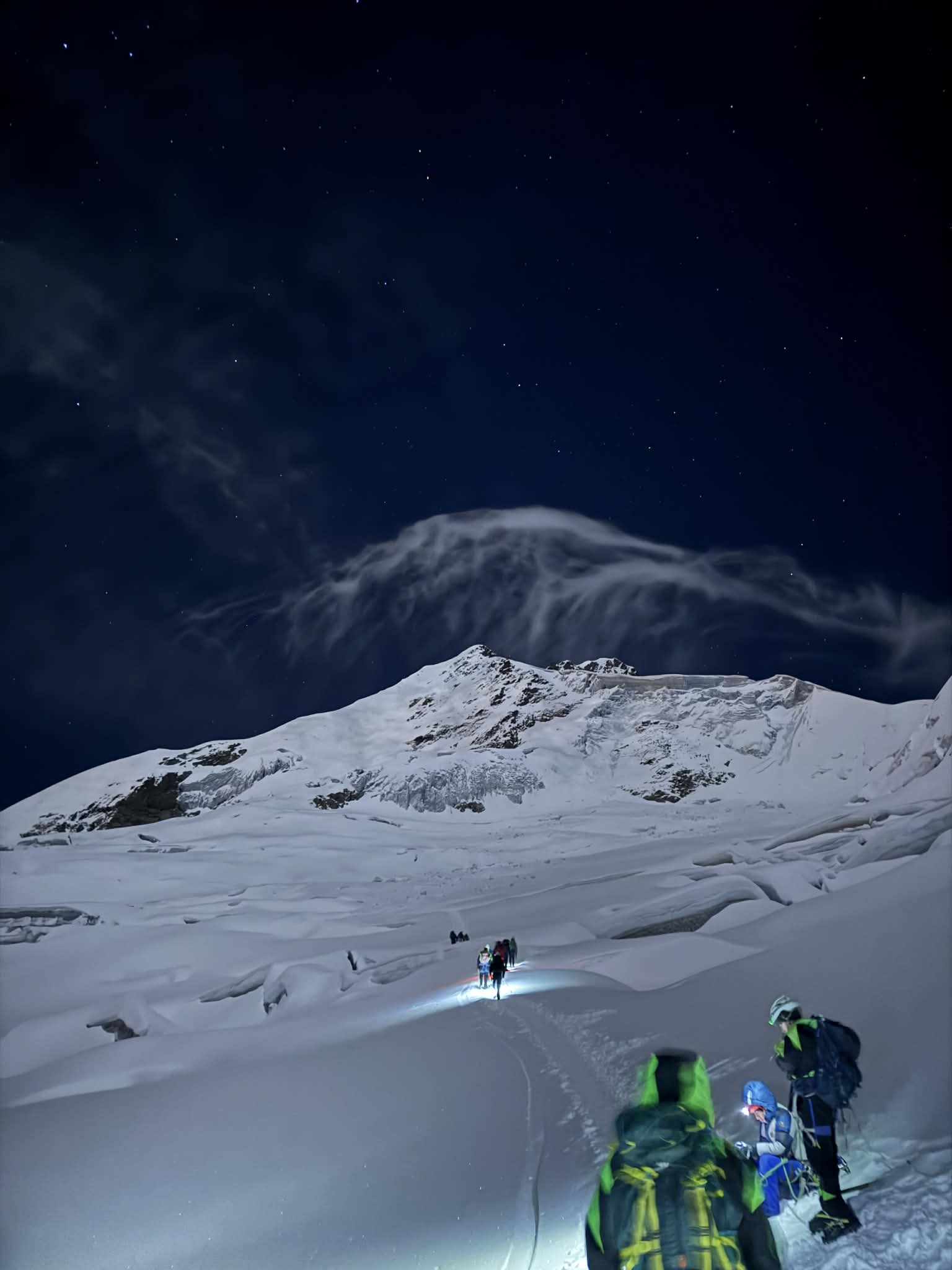
Midnight, at the refuge. Outside, the Andean sky is huge and the trail heads off into the dark, marked by the headlamps of rope teams already on their way. You strap on the crampons you learned to use two days ago, rope up with your guide, and start climbing toward your first 6,000er.
Huayna Potosí rises to 6,088 m, an hour and a half's drive from La Paz. It's known as "the most accessible 6,000er in the world": you don't need to be a mountaineer, one day of ice school covers the technique. The rest is a real altitude objective. Up there, the air holds half as much oxygen as down below, and that's exactly what gives this summit its value: you don't visit it, you earn it.
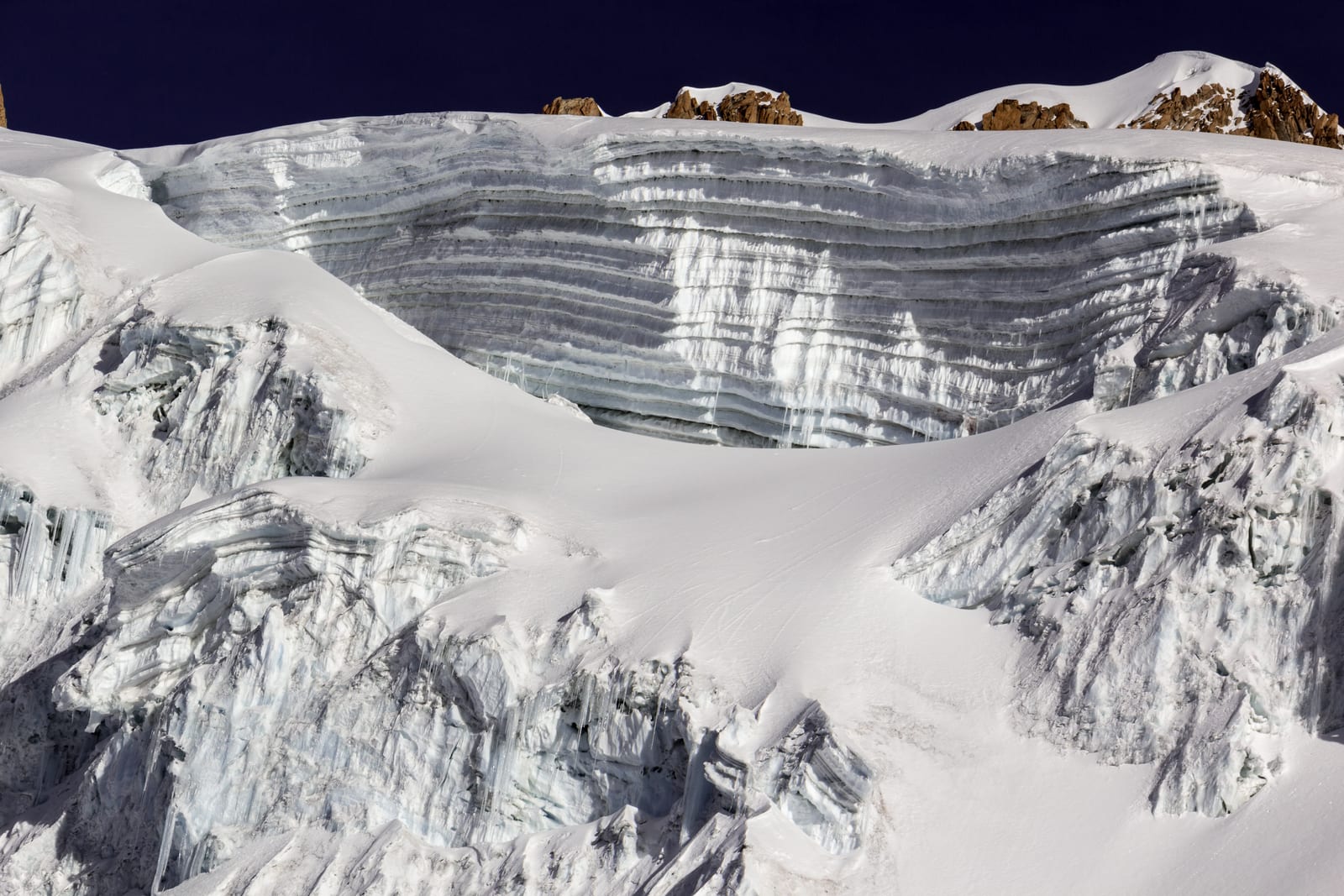
The section you'll remember has a name: the final headwall. A steep ice slope, above 6,000 m, just before dawn. A few dozen metres of focused effort, your guide ahead, the sky starting to pale behind you. That's where it all comes down to, and that's where you break through.
Then the moment. The summit at dawn, the Altiplano catching fire 2,000 metres below, Lake Titicaca in the distance, the Cordillera Real lined up at eye level. You've touched 6,000 metres. You come down in the morning, and that evening you're having dinner in La Paz, with a story few people around the table will be able to follow.
Sunrise from the summit headwall, the Altiplano catching fire 2,000m below.
The very particular confidence you bring back from a summit earned against yourself, and the right to say "I climbed a 6,000er".
Day by day
Ice school
You leave La Paz in the morning. About 1 h 30 of dirt road later, you reach base camp, around 4,700 m. In the afternoon, on the nearby glacier, your guide teaches you the essentials: putting on crampons, planting the ice axe, walking roped up, climbing a short ice slope. Night at the base-camp refuge.
Adjust your crampons yourself at least once. At midnight, by headlamp and with frozen fingers, you'll be glad you know how.
Up to high camp
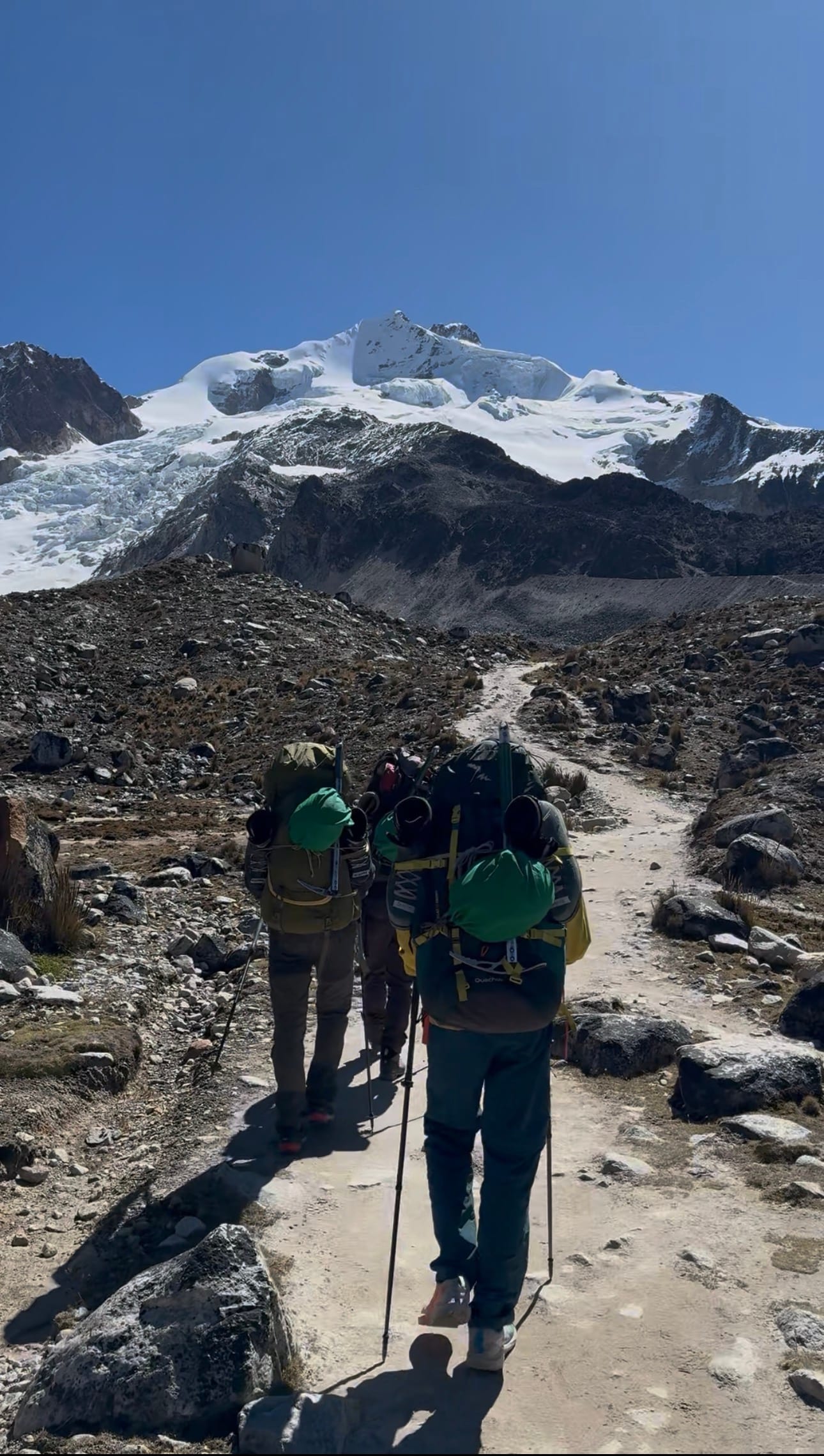
You climb to the high refuge, around 5,200 m: 2 to 3 steep hours on a rocky trail, carrying your gear. On arrival: rest, early dinner, lights out around 6 pm. The alarm goes off around midnight.
Pack your summit bag before you sleep: headlamp, gloves, water, snacks, all within reach. At midnight, you won't want to look for anything.
Summit
Wake-up around midnight, hot tea, crampons. You set off by headlamp, roped to your guide, for 5 to 7 hours of climbing on the glacier. Just before dawn, the steep final headwall, then a narrow ridge to the summit. Up there, at sunrise, Illimani and Condoriri face you. Then down to the refuge, base camp, and La Paz in the afternoon.
Start slowly, slower than seems reasonable. The pace that feels ridiculous at the foot of the glacier is the one that gets you to the top.
What nobody tells you before you go
- 01
Don't climb straight off the plane. Give yourself 3 to 4 days in La Paz before the quest, and do at least one acclimatization hike to around 5,000 m. It's the best investment of your whole trip.
- 02
You'll sleep badly at the high refuge. That's normal at 5,200 m. Lie down, breathe, drink: rest counts, even without sleep.
- 03
Eat without being hungry. Altitude kills your appetite, and that's exactly when you need to get something down. Fill your pockets with bars, dried fruit and chocolate.
- 04
Water freezes up there. Sleep with your bottle inside your sleeping bag and, on summit day, carry it under your jacket. A thermos of hot tea is even better.
- 05
Protect your eyes and skin. At dawn, the glare off the snow burns within minutes. Glacier glasses, sunscreen, lip balm: non-negotiable.
- 06
Keep your phone warm against your body. Cold drains batteries, and it would be a shame to miss the summit photo.
- 07
The summit isn't the goal, getting back down is. If your guide says turn around, you turn around. Huayna will still be there next year.
- 08
Test your boots in La Paz. The mountaineering boots provided are stiff, and plenty of climbers have suffered in them. Wear two pairs of wool socks and flag the slightest rubbing before you leave.
- 09
If a porter is offered for the climb to the refuge, take one. The gear is heavy on that steep trail, and every bit of energy saved on day two counts the following night.
- 10
No signal up there. Download a podcast or a film for the afternoon at the refuge: the hours before bedtime are long.
What travelers say about it
Summaries of their published accounts, missed summits included. Read them in full, they're worth it.
He reaches the summit on his 29th birthday. The night before, at the high refuge, he sleeps an hour, maybe two, between excitement and thin air. What got him through: the very slow pace set by the guides.
A climb by moonlight, more than 30 cm of fresh snow on the final wall, then a narrow ridge above the drop. That day, only two rope teams made the summit. In their group, nobody wanted to be the first to give up.
Departure at midnight, six hours of climbing in the dark, summit at 6:09 am. One member of the group had to give up on day two, caught by altitude sickness. And of the litres of water carried up, barely 700 ml drunk: you forget to drink when you never stop.
Around 3 am, at 5,450 m, facing a steep ice slope, she can no longer drive her ice axe in: two almost sleepless nights, no appetite, no strength left in her arms. She turns back. Three of her companions reach the summit.
She stops in the middle of the night at a crevasse crossing: a big step, almost a jump, that looks huge by headlamp, in stiff boots that have been hurting for hours. She heads down through a small snowstorm. She regrets nothing.
Is this one for you?
You're in good physical shape, you dream of reaching high altitude, and the idea of earning a 6,000 m summit excites you more than it scares you.
Heart or breathing problems, a bad past experience with altitude sickness, or if a long effort, at night and in the cold, really doesn't appeal to you.
Getting ready
The level
No mountaineering experience. The ice school on day one teaches you everything you need. Suggested minimum age: 16 to 18.
This is the part not to take lightly. On summit day, you walk 6 to 8 hours at altitude, at night, in the cold. If you run, hike or cycle regularly, you have the right base. If not, plan two to three months of cardio training before you go.
Acclimatization
The real secret of Huayna. Spend at least 3 to 4 days in La Paz (3,600 m) before going up: walk, sleep, drink plenty. An acclimatization hike to around 5,000 m makes a real difference. If you like, I'll help you plan those days when you send your request.
Getting there
Everything starts in La Paz. You land at El Alto (LPB airport), above 4,000 m: altitude starts on the jet bridge. Transfers between La Paz and base camp are included.
Sleeping and eating
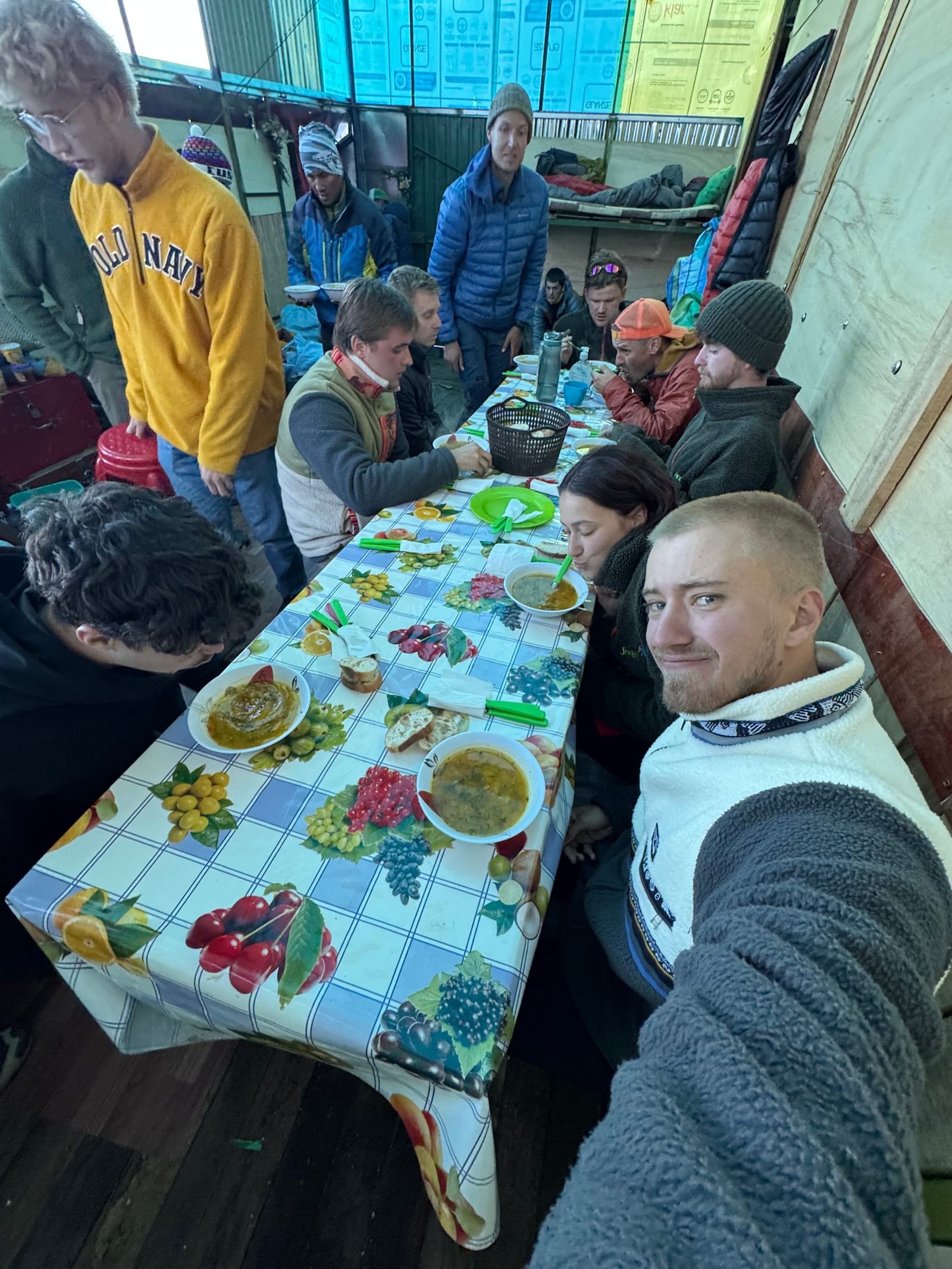
Two nights in refuges. The first at base camp, around 4,700 m. The second at the high refuge, around 5,200 m: bunk-bed dorm, cold at night, minimal comfort. You don't come here to sleep, you come here to leave at midnight.
All meals over the three days are included. Bring your own snacks for summit day: bars, dried fruit, chocolate.
Safety
You climb roped up, with one certified guide for two climbers, after a day of ice school. The main risk is acute mountain sickness. The rule is simple: the guide decides when to turn back, and safety comes before the summit.
Travel insurance with repatriation is mandatory for this quest.
Paperwork and health
Depending on nationality: check official Bolivian sources.
See your doctor before you go, especially about altitude. No specific vaccine is required for the quest: check the official recommendations for Bolivia.
Your pack
- Warm clothing (layers)
- Gloves
- Hat
- Glacier sunglasses
- Headlamp
- Water bottle
- Crampons
- Ice axe
- Harness
- Helmet
- Rope
- Mountaineering boots
Frequently asked.
Do I need mountaineering experience?+
No. The ice school on day one teaches you crampons, ice axe and roped walking. Good physical condition, on the other hand, is non-negotiable.
Is it really the "easy" 6,000er?+
Accessible, yes. Easy, no. Technically, it's one of the most approachable 6,000ers in the world. But at that altitude every step counts, and the final headwall is steep. Your preparation makes the difference, not your climbing résumé.
Do I need to acclimatize beforehand?+
Yes, strongly. Allow at least 3-4 days in La Paz (3,600 m) before the climb: that's what makes the difference at the summit.
What are my chances of reaching the summit?+
They depend mostly on your acclimatization and how you feel on the day. Well acclimatized, you give yourself every chance. Arrive in La Paz the day before, and they drop while the risk goes up. I'd rather tell you now than up there.
What is the best time of year?+
The dry season, from May to September. The sweet spot: June-August.
What should I budget on top of the quest price?+
Your flight, high-altitude insurance, your acclimatization nights in La Paz and tips for your guide. Everything else over the three days is included: guide, technical gear, refuges, meals and transfers.
What if I feel unwell on the way up?+
Tell your guide, right away. A headache that settles in, nausea, dizziness: those are the signs of altitude sickness, and the only real cure is to go down. Your guide decides, and they're right.
Do I need insurance?+
Yes, it's mandatory: travel insurance with repatriation and high-altitude cover. I can advise you on it when you send your request.
What are the risks?+
The main one is acute mountain sickness. Certified guides and serious acclimatization greatly reduce it, and safety always comes before the summit.
Leave your details: I'll come back to you with dates, spots and everything you need to book (≈ 361 €).